

How did Gen Z become the most religious generation alive?
“I remember when I was in school I would tell people I believed in God and they would be like ‘you’re a loser’. Now I couldn’t be prouder, it’s becoming more normal.”
Love Island and TOWIE star Matilda Draper isn’t your average Christian evangelist – but the 25-year-old is one of a growing number of young influencers spreading the word of God online.
“There’s so much bad in the world, there’s so much negativity that you see online,” she says.
“The stuff we fill our brain with – it doesn’t have any substance and I do think that people are yearning for purpose and fulfilment”.
A recent YouGov study found that Gen Z believe in a higher power more than any other generation, with data showing there has been a rise in the religiosity and church attendance among young people.
Their levels of faith now even surpass the 65+ age group.
Dr Edward David, a lecturer at King’s College London, researched the religious behaviours of young people and attributes the increase – in part – to social media.
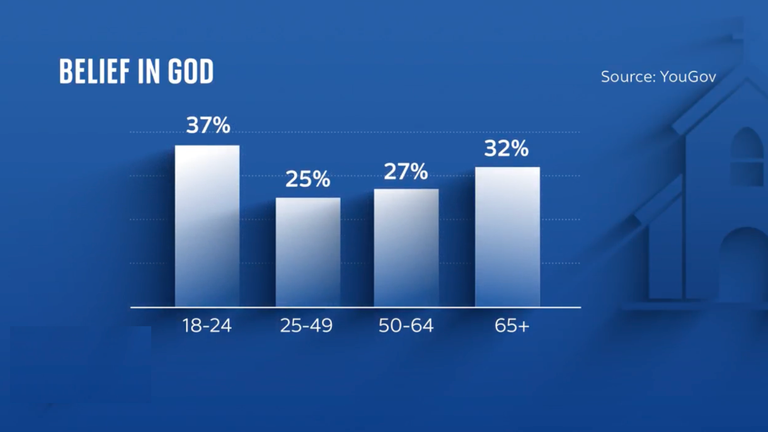
More young people now believe in God than older generations, according to a YouGov survey
“Priests and clerics are telling researchers that they are seeing an influx of young people knocking on their doors because they have encountered a religious idea on Instagram,” says Dr David.
“A lot of young people are learning about religion for the very first time via social media. They might see a 30-second video and then they are hungry for more,” he adds.
He also says Generation Z have got the “short end of the economic and social stick”, citing the pandemic and cost of living crisis as examples.

Matilda Draper being baptised. Pic: MatildaJDraper/TikTok
As a result, he says young people are “looking for answers”.
‘I’ve definitely noticed a change’
Draper grew up attending church, though says she thinks it’s “becoming more normal” to have faith as a young person – as “more people talk about it online”.
“I’ve definitely noticed a change in people speaking about God. I see it a lot on TikTok now, young preachers on the street.
“It’s so important for anyone with a following – if you can do that [post about faith] that’s such an amazing thing to do.”
A video she posted of herself being baptised received more than 1.3 million views on TikTok.
Draper is one of many influencers who use their platform to talk about religion.
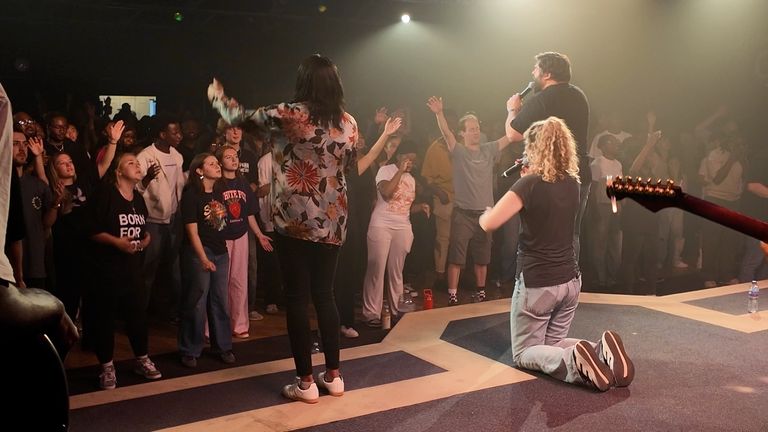
Young people attend a service at Citygate Church, Beckenham
There are more than 25 million videos on TikTok posted under the hashtag #ChristianTikTok.
Zack Ubi and Chrissy George – both 25 – have amassed millions of views from posting religious content on social media.
They both say they have noticed “such a rise” in young people coming to church in the last year.
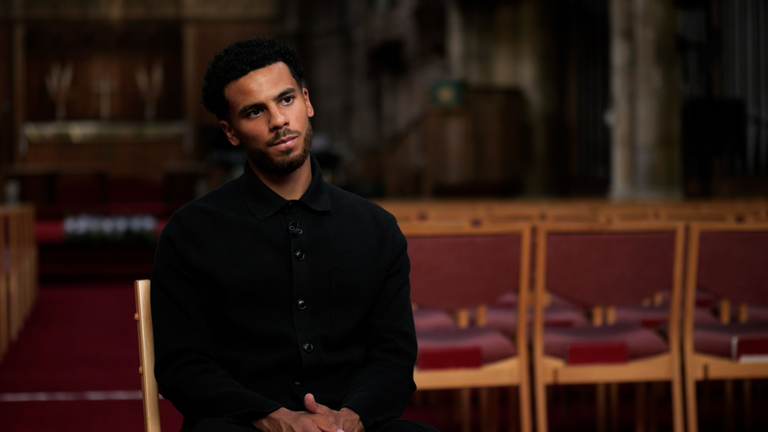
Zack Ubi posts religious content on social media
“It’s not just the usual demographic you think would come to church,” Zack says. “I am seeing people that look like me, dress like and are similar ages to me.
“There’s loads of examples of people messaging me and saying my videos are the reason they have turned to faith,” he adds, illustrating the influence social media can have.
Chrissy also helps to run a TikTok account for her church, creating content to appeal to younger audiences.
“I get so many DMs [direct messages] from young people asking about our church services and how they can get involved,” Chrissy says.
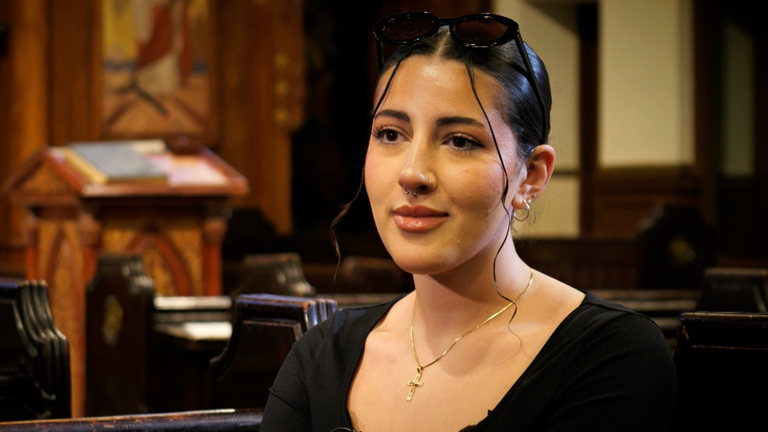
Chrissy George says she gets messages on TikTok asking about church
She says she thinks community is another factor driving young people to religion, arguing that this is lacking in society.
YouGov also conducted two studies in 2018 and 2024, tracking how religiosity changed among 18 to 25-year-olds.
It identified a stark rise in young people attending church and those who say they believe in a higher power.
Over the six-year span, the number of young people who said they attended church monthly increased from 7% to 23%.
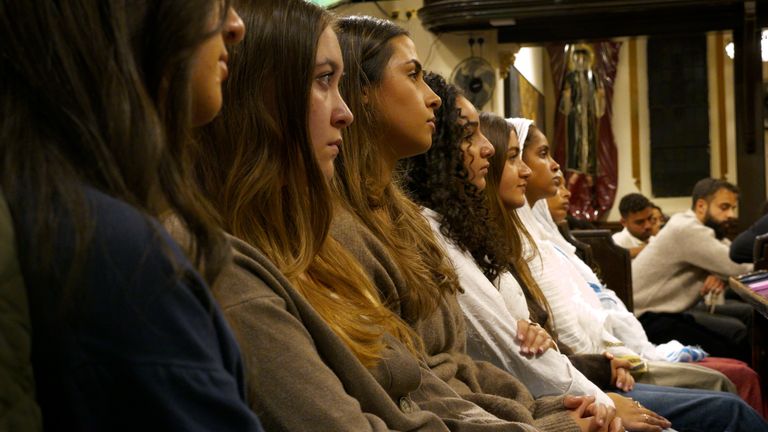
An increase in reported faith has been attributed in part to social media
Similarly, just 28% of young people said they believed in a higher power in 2018, and this increased to 49% six years later.
‘I don’t see anyone posting about religion’
This trend is not representative of all young people, however.
Hetty Owen is an atheist and says this is not something she has observed despite being active on social media, adding she is “surprised” to hear about the data.
“I don’t see anyone really posting about [religion] and if I do, it’s more like religious persecution,” the 23-year-old says.
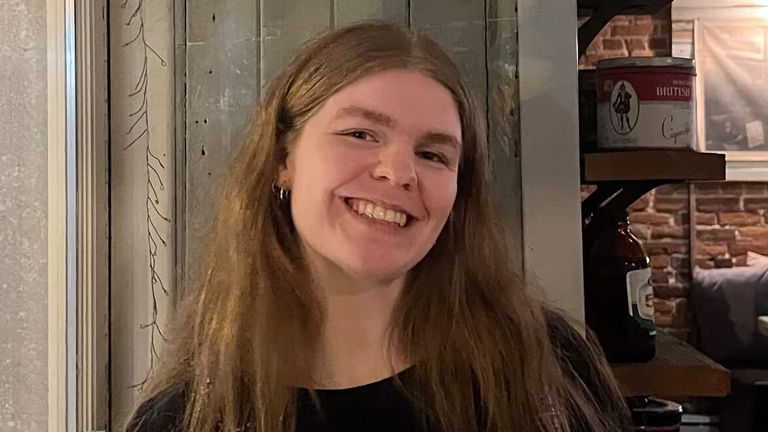
Hetty says she has not noticed more discussion about faith online
Hetty says she believes the increase in interest about religion could be a result of the COVID pandemic, with fewer young people going to university and being exposed to other perspectives.
However, the data shows young people have more of an interest in faith than some of the older generations.
Whether this change is just temporary remains to be seen, but Gen Z seems to be reshaping ideas about faith in the modern day.
