

Palestine Action activist on hunger strike for nearly 70 days ‘deteriorating’
Palestine Action hunger strikers could be at risk of death, the group and a leading doctor have warned, as one of them enters 69 days without food.
Three prisoners on remand are taking part in the action over demands including immediate bail – with one reportedly admitted to hospital for a fifth time.
Their lawyers say that by the time of their trial, they will have spent more than a year in custody.
Prisons minister Lord Timpson has said the prisoners are charged with serious offences and remand decisions are for independent judges.
At nearly 70 days, 31-year-old Heba Muraisi has spent the longest on hunger strike and her friends say her health is slowly deteriorating.
Speaking to Sky News after visiting Muraisi on Tuesday, her friend Amareen Afzal told Sky News: “I think she’s lost over 10kg now. She looks very different to the photographs that you’ll see of her.
“Her face is very gaunt, cheekbones are very prominent. She’s physically exhausted, very tired.
“She is constantly suffering with headaches and lightheadedness. Sometimes she gets so lightheaded she feels nauseous and that’s quite common.”

Amareen Afzal visited Muraisi in prison
Ms Afzal, who is also a member of Palestine Action, said Muraisi “struggles to sleep on one side of her body because it’s too painful”.
“So she’s aware that she’s deteriorating and physically dying, you know, that her body could fail her at any moment,” Ms Afzal added.
“I am obviously frightened for her and her life, I want her to be OK, but I’m incredibly proud of her and like completely in awe of her resilience and her.
“I think that word can be a little bit overused but I think there is something about her strength that comes from her commitment to her values. It is awe-inspiring to me.”
Hunger striker taken to hospital
On Tuesday, Kamran Ahmed, 28, was admitted to hospital for a heart complication on day 58 of his hunger strike, his sister told Sky News.
A letter signed by 50 MPs called on the government to “respond positively and with humanity” to the hunger strikers, warning of “considerable alarm” over Muraisi and Ahmed’s deteriorating health.
It said: “Independent physicians have advised that they are into a critical phase stage, in which their condition is likely to decline very quickly and irreversibly.”

Kamran Ahmed was admitted to hospital
Birmingham-based neurologist Dr David Nicholl, who has studied prison hunger strikes for two decades, says the Palestine Action prisoners on hunger strike could be at serious risk of permanent harm and death.
“The biggest risk immediately is what’s called refeeding syndrome,” he said.
“If you picture yourself having not eaten for a number of days, you need to gradually – very gradually – increase your calorie intake.
“Because your body’s not used to suddenly eating, there’s a risk of getting very sick and actually people have died having stopped the hunger strike, but having developed refeeding syndrome.”
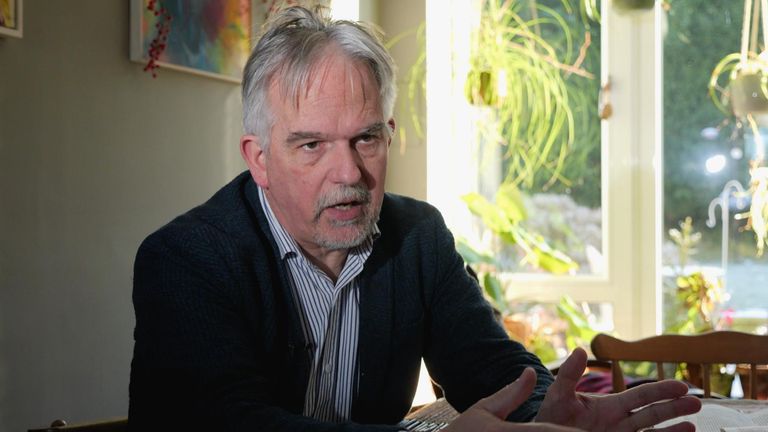
Dr David Nicholl
Dr Nicholl explained that even without death, months-long hunger strikes can leave lasting health implications, including neurological and cognitive disorders, dementia, vertigo, sight loss and extreme weakness.
Ex-hunger striker describes health impact
In 1981, Pat Sheehan was among a group of Republican prisoners who went on hunger strike in Northern Ireland.
A total of 10 people died, including Bobby Sands, whose death is thought to have been a turning point in the Troubles.
Mr Sheehan went without food for 55 days before the strike was called off.
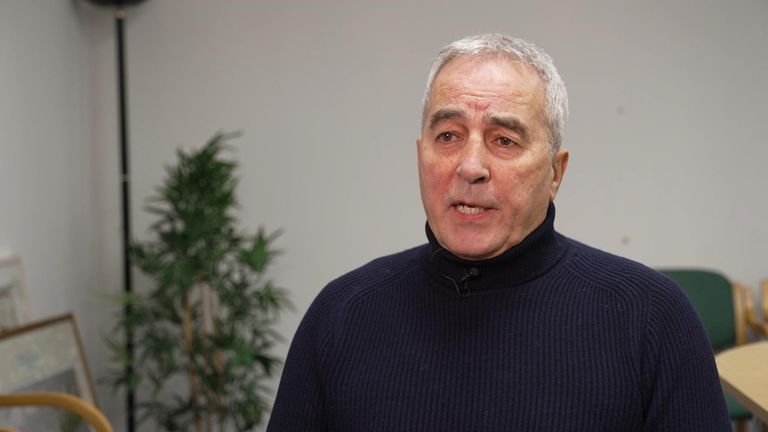
Pat Sheehan went on hunger strike in Northern Ireland
“I was the longest on hunger strike when it ended. And in theory, I would have been the next person to die,” he told Sky News.
“At that stage, I weighed about between 7 and 7.5 stone. I was completely yellow with jaundice. My eyesight had nearly gone completely.
“I could make out shapes coming into the room, but I wouldn’t have been able to identify anyone.”
He added: “I have always said that as I became weaker physically, there is absolutely no doubt that I became stronger psychologically.”
He said he knew he would not give up the hunger strike unless he was “ordered to or we achieved all our demands”.
One of those on hunger strike – Lewie Chiaramello, who is type 1 diabetic – has been fasting every other day.
They all deny charges related to alleged break-ins or criminal damage, carried out in the name of Palestine Action, before the group was banned under terrorism legislation.
The trio say they will starve until Palestine Action is de-proscribed and until the UK ends support for companies that send weapons to Israel.
They are also demanding immediate bail or transfers to prisons closer to home so family members can visit.
Prisons minister Lord Timpson said: “Prison healthcare teams provide NHS care and continuously monitor the situation. His Majesty’s Prison and Probation Service is clear that claims that hospital care is being refused are entirely misleading – they will always be taken when needed and a number of these prisoners have already been treated in hospital.
“These prisoners are charged with serious offences including aggravated burglary and criminal damage. Remand decisions are for independent judges, and lawyers can make representations to the court on behalf of their clients.
“Ministers will not meet with them – we have a justice system that is based on the separation of powers, and the independent judiciary is the cornerstone of our system. It would be entirely unconstitutional and inappropriate for ministers to intervene in ongoing legal cases.”
